
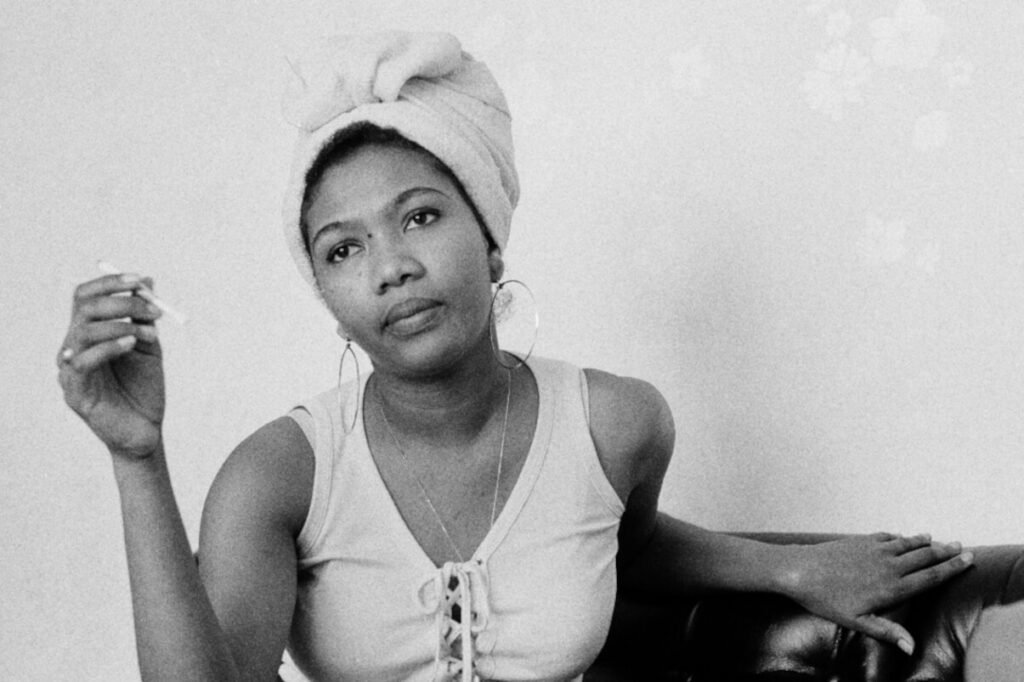
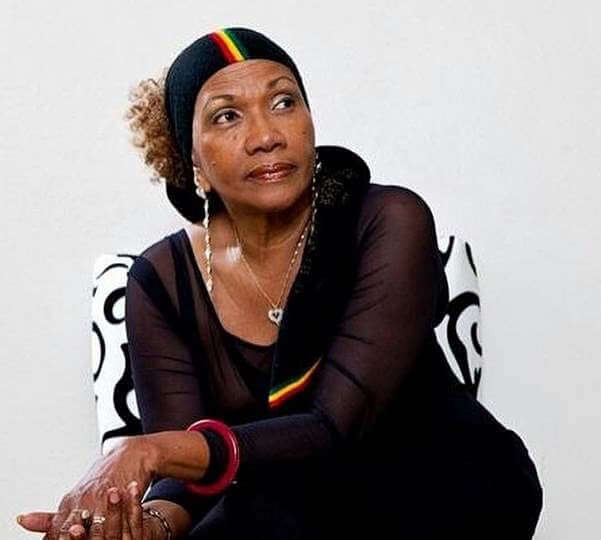
Marcia Griffiths is often called the Queen of Reggae – and she has the career to back it up.
Singer, songwriter, harmony specialist, stage warrior: she has been active for over 60 years, from ska and rocksteady to roots, lovers rock and digital dancehall.
Most sources give her full name as Marcia Llyneth Griffiths, born 23 November 1949 in Kingston, Jamaica.
Early life and first steps on stage
Marcia grew up in West Kingston, singing in church, at school events and at friends’ houses. Her big break came in 1964 when she was only a teenager.
Philip “Boasie” James from vocal duo The Blues Busters heard her singing next door at a yard and was blown away. He convinced bandleader Byron Lee to let her sing one song at the famous Easter Monday concert at the Carib Theatre in Kingston.
She stepped on stage with Byron Lee & The Dragonaires and sang a soulful version of Carla Thomas’s “I’ve Got No Time to Lose”. Some musicians doubted this young girl, but the crowd went crazy. She got an immediate TV appearance, and from that day she was a professional singer.
Marcia later said she felt she was “on a mission from God” – not just to entertain, but to touch, teach and uplift people through music.
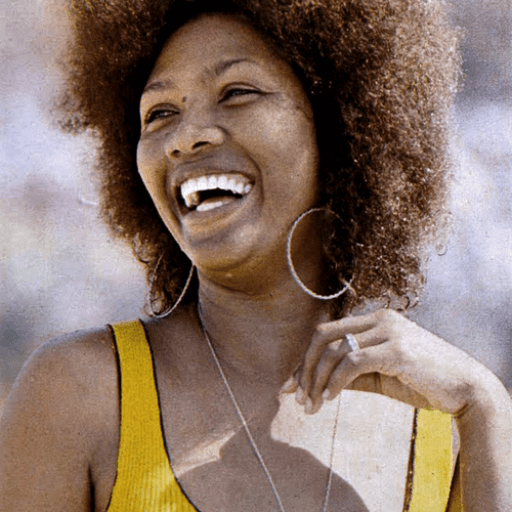
Studio One – “Feel Like Jumping” and early hits
After those first shows with the Dragonaires, labels started to chase her. She soon signed to Studio One, the legendary Kingston label run by Clement “Coxsone” Dodd – often called the “Motown of Jamaica”.
At Studio One she met two key people:
- Bob Andy (Keith Anderson) – songwriter, singer, mentor and later duet partner.
- Bob Marley – then an up-and-coming artist with The Wailers.
Bob Andy wrote many of her early hits, including “Feel Like Jumping”, “Truly” and “Melody Life”,
“Feel Like Jumping” became a rocksteady classic in Jamaica and also made waves in the UK. These songs appeared on her early Studio One LPs, usually grouped later as Marcia Griffiths at Studio One and other collections.
Marcia has often said Bob Andy helped protect her in a male-dominated industry, stopping people from taking advantage and giving her confidence to grow as a young woman in music.
Bob & Marcia – “Young, Gifted and Black”
Around 1969, Marcia and Bob Andy became a full duet act, simply called Bob & Marcia.
They moved from Studio One to producer Harry J (Harry Johnson), whose recordings were licensed to Trojan Records in the UK.
Together they scored big international hits with “Young, Gifted and Black” ( a reggae version of Nina Simone’s anthem) and “Pied Piper” (a cover of a 1960s pop tune).
Both songs spent many weeks on the UK charts in 1970–71 and helped bring reggae deeper into the British mainstream. Sadly, like many Jamaican artists of that time, Bob and Marcia saw little money from these hits, despite their massive success.
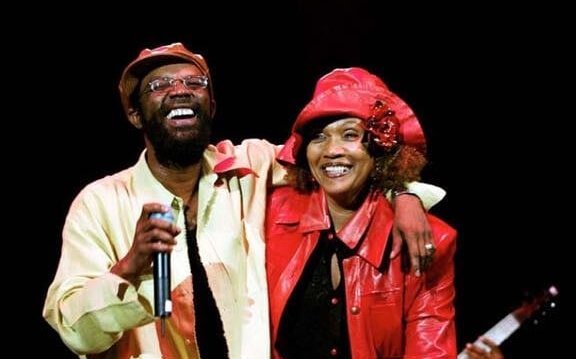
By the mid-1970s, the duo followed separate paths, but they remained close and later reunited for albums like Really Together (1990) and Sweet Memories (1997).
I-Three and Bob Marley & The Wailers
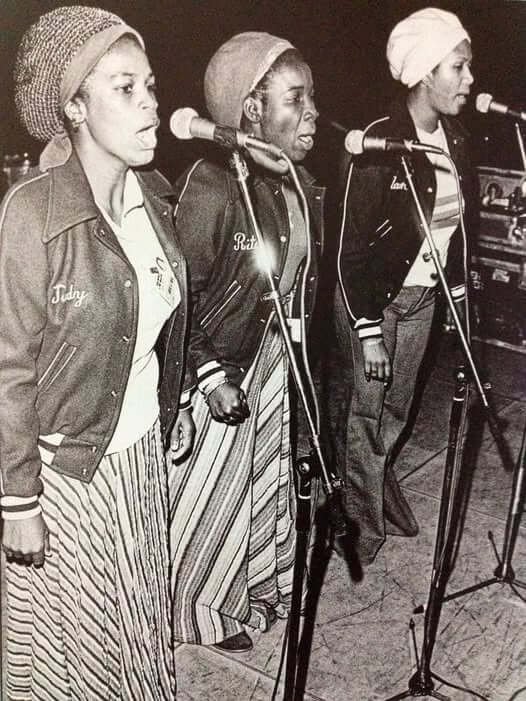
In 1973, producer Coxsone Dodd called Marcia and Rita Marley to sing harmonies on a record for Horace Andy. They invited singer Judy Mowatt to join them on stage for some shows in Kingston, and the blend of their voices was so strong that they formed a trio.
Marcia suggested the name I-Three (“we three” with a Rasta twist). The group formed in 1974 and became the official backing singers for Bob Marley & The Wailers after Peter Tosh and Bunny Wailer left the band.
The I-Three sang on classic albums including Natty Dread (1974), Rastaman Vibration (1976), Exodus (1977), Kaya (1978) and later releases up to Confrontation (1983).
Their harmonies and regal stage presence became a key part of Marley’s live show. They toured the world with him until his final concert in Pittsburgh in 1980.
Marcia often says working with Bob Marley changed how she saw music and the business around it, making her more aware of publishing, rights and the power of lyrics to move people.
Roots reggae masterpieces: Naturally and Steppin’
While touring with The Wailers, Marcia kept building her solo catalogue.
In the late 1970s she recorded two of her most respected albums with producer Sonia Pottinger and the band The Revolutionaries: Naturally (1978) and Steppin’ (1979).
For many collectors and critics, Naturally is one of the finest roots albums ever recorded by a female artist.
“Electric Boogie” and the Electric Slide
In 1982, Marcia recorded “Electric Boogie”, written for her by Bunny Wailer. The song started as a studio experiment over a rhythm box she had bought in Toronto. The track reached number one in Jamaica but only became a global phenomenon years later.
A 1989 remix, included on the album Carousel, connected with US radio and dance floors. It climbed to No. 51 on the Billboard Hot 100 and created the line dance known as the Electric Slide.
“Electric Boogie” is still the best-selling single of all time by a female reggae artist, and a standard at weddings and parties in North America.
For a singer who started in rocksteady and roots, this song proved how flexible and modern Marcia’s voice and style could be.
Penthouse era and 1990s dancehall
In the late 1980s and 1990s, Marcia found a new home with Penthouse Records and producer Donovan Germain. They reworked classic riddims with digital production and paired her with big-name deejays.
Key songs from this era include “I Shall Sing”, “Fire Burning”, “Live On” (with Beres Hammond) and “Closer” (with Buju Banton). These tracks showed she could ride modern dancehall and still keep her warm, soulful tone.
Timeless and tributes to Studio One
In 2019, Marcia released Timeless, a full Studio One tribute album. It features 15–16 songs from the label’s classic catalogue, re-sung by her with modern yet respectful arrangements.
The tracklist honours artists such as The Heptones, The Cables, Jackie Opel and others who helped build ska, rocksteady and early reggae.
On vinyl, Timeless is a beautiful bridge between foundation Studio One songs and Marcia’s own long history with the label – a perfect pick for a reggae vinyl collection.
Awards, honours and 60 years in music
Marcia Griffiths is not only loved by fans. Jamaica has also honoured her work at the highest level:
- Order of Distinction (OD) – 1994
- Order of Distinction, Commander Class (CD) – 2014
- Order of Jamaica (OJ) – October 2023 – she is the only Jamaican female artist to hold this honour so far
In 2024, she celebrated 60 years in music with special “Marcia Griffiths & Friends” concerts in Miramar, Florida and Hope Gardens, Kingston, sharing the stage with artists from several generations such as Shaggy, Busy Signal, Tanya Stephens, Tessanne Chin and others.
She continues to tour worldwide, and in 2025 the University of the West Indies announced that she would receive an honorary Doctor of Letters (DLitt) for her contribution to music and the empowerment of women.
Why Marcia Griffiths matters
Marcia Griffiths is important to reggae history for many reasons:
- She is one of the first women to become a long-term, front-line star in Jamaican music.
- She was there as reggae grew out of ska and rocksteady, and she stayed relevant into the digital dancehall era.
- Her voice is on key Bob Marley albums and tours as part of the I-Three.
- She has classic songs in roots reggae, lovers rock, dancehall and crossover pop.
- She has supported and inspired generations of female singers, often speaking about how hard it is to stand as a woman in a male-dominated business.
- “Electric Boogie” and the Electric Slide gave reggae a permanent place on global party dance floors.
- For all this, many fans now call her not only “Queen of Reggae”, but also an Empress of Reggae, a living icon whose career tells the story of the music itself.
Quick FAQ about Marcia Griffiths
Marcia Griffiths is a Jamaican singer from West Kingston, active since 1964. She is known for hits like “Feel Like Jumping”, “Steppin’ Out of Babylon” and “Electric Boogie”, and for singing with Bob Marley as part of the I-Three.
Because she has one of the longest and strongest careers of any reggae singer, male or female. She has hits in many styles, helped carry Bob Marley’s message to the world and inspired almost every new generation of female reggae vocalists.
Globally, her best-known song is “Electric Boogie”, especially the 1989 remix, which powers the Electric Slide dance and is the best-selling single ever by a female reggae artist.
Yes. In 2024 Marcia <griffiths marked 60 years since her first stage performance with special concerts in Florida and Jamaica under the name “Marcia Griffiths & Friends”.
She holds Jamaica’s Order of Distinction (OD), the Order of Distinction, Commander Class (CD) and the Order of Jamaica (OJ), and she is set to receive an honorary Doctor of Letters from the University of the West Indies.
Sources:
Biography by Mark Deming on allmusic.com
Official website marciagriffiths.com/bio/
Interview on billboard.com
Cover image by Michael Putland Getty Images (Marcia Griffiths in London in 1971)