

When it comes to the “sweet spot” that bridges the gap between Jamaican grooves and Motown soul, few voices shine as brightly as Susan Cadogan, one of the defining voices of Lovers Rock.
Her journey from a quiet library in Kingston to the top of the UK charts made her a key voice in the shift from heavier, roots‑driven reggae toward the smooth, romantic style that came to define late‑1970s and 1980s lovers rock.
From the Library to the Studio: An Accidental Star
Born Alison Anne Cadogan on November 2, 1951, in Kingston, Jamaica, Susan didn’t set out to be a superstar. Though she came from a musical family—her mother was a gospel singer—Alison was perfectly content working as a librarian at the University of the West Indies.
Her big break happened almost by accident. A friend’s boyfriend, broadcaster and DJ Jerry Lewis, was impressed by her voice and took her to the JBC studio in 1974 to record his track, “Love My Life.” As fate would have it, the legendary producer Lee “Scratch” Perry was in the studio that same day. Perry knew talent when he heard it, and he immediately took her under his wing with a new vision—and a new name.
The Birth of “Susan” and the Lee Perry Era
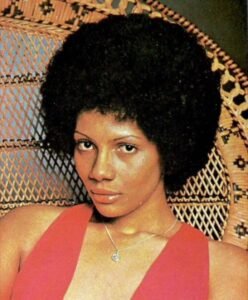
Lee Perry felt “Ann” didn’t quite match the smoldering, delicate quality of her vocals. As the story goes, he told her:
“Ann? Nah mon. You mean Susan! That sounds sexy.”
Under Perry’s mentorship, Susan recorded a series of covers that would change her life. While Perry was known for his wild, experimental production at the Black Ark, he showed a restrained, soulful touch with Susan.
Their greatest collaboration was a reggae cover of Millie Jackson’s soul classic, “Hurt So Good.” While the song initially moved slowly in Jamaica, it exploded in the UK, helped by the British sound system exposure. By March 1975, Susan was sitting in the Top Five of the UK National Charts, appearing on television and becoming a household name across the Atlantic.
The Evolution of Lovers Rock
As the 1970s progressed, the UK reggae scene began to shift from the heavy political themes of Roots toward something more romantic and melodic. Susan Cadogan was at the forefront of this movement.
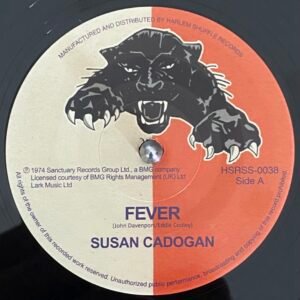
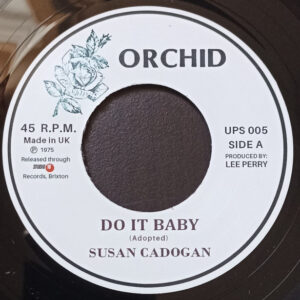
She briefly worked with pop producer Pete Waterman, recording singles like ‘Love Me Baby’ (a UK chart hit) and ‘Do It Baby’. But her heart remained with the soulful side of reggae. After a brief hiatus back in Jamaica, she returned to the charts in the early ’80s with hits like “Fever“, “Piece of My Heart” and “(You Know How to Make Me) Feel So Good” (a stunning duet with Ruddy Thomas).
These tracks helped cement her status as a key voice in Lovers Rock—a genre characterized by its smooth arrangements and themes of love and heartbreak.
In Her Own Words: The Interviews
To truly understand Susan’s spirit, you have to hear it from her. Here is a look at her early days and her unique relationship with the industry:
Angus Taylor (United Reggae): Did you take part in talent shows when you were young?
Susan Cadogan: “Never! Never. I used to sing in the church choir. I used to just love to sing and then one night all of a sudden I got the opportunity to sing this song for a friend. I was doing it at Perry’s Studio and he asked me to sing Hurt So Good, and I did an album for him and got a million-seller. Who could ask for more? Lucky Susan! (laughs)”
Magdalena Miszewska (Rudemaker): I’ve read somewhere that before you recorded with Lee Perry you were more into R&B, not reggae.
Susan Cadogan: “Yeah, I used to love The Supremes and Motown sound and funky things and I didn’t even hear the radio much unless I was driving. I used to always sing at night, ’cause when I was young I was kind of plump. So at night I’d put on my albums, my Supremes and I’d sing along like I was them, and I’d sweat a lot. I lost a lot of weight. My friend used to say: ‘But Ann you can sing.’ You know, Ann is my real name, Allison, Ann. ‘You can sing, you know?’. Because I used to be able to mime them exactly, you know. (sings) ‘Baby, baby’, Supremes, Diana Ross, (sings) ‘Whenever you need me..’. And I used to like Ben E. King and The Platters and all that good stuff.”
Magdalena Miszewska (Rudemaker): And you came as Ann and you went out as Susan.
Susan Cadogan: “You know the story? When he asked me my name and I said my name is Ann Cadogan, he said: ‘Ann? Nah mon. You mean Susan! That sounds sexy’. So he dubbed me Susan and he said: ‘I want you sing some more songs for me’. And he gave me some tips to learn. That’s how it all began.”
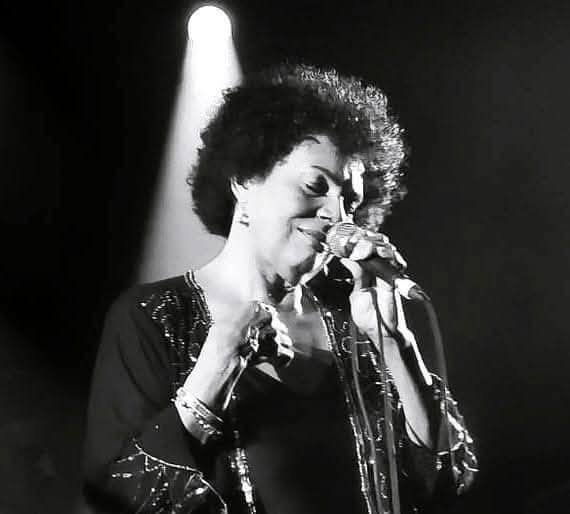
The Legacy of a Reggae Icon
Susan Cadogan’s career has been sporadic—she often stepped away from the limelight to return to her library work or private life—but her impact is undeniable.
Whether collaborating with the Mad Professor in the 90s on the Soulful Reggae album or seeing her hits covered by pop stars like Jimmy Somerville, her voice remains a gold standard for “Sweet Reggae.”
FAQ About Susan Cadogan
Her birth name is Allison Anne Cadogan. The name “Susan” was given to her by producer Lee “Scratch” Perry.
Her most famous song is “Hurt So Good,” which reached the UK Top 5 in 1975. Other famous songs include “Fever,” “Do It Baby,” and “Love Me Baby.”
Throughout her music career, Susan frequently returned to her job as a librarian at the University of the West Indies in Jamaica whenever she wanted a break from the music industry.
While she started in Reggae and Rocksteady, she is often hailed as a “Queen of Lovers Rock” due to her smooth, romantic vocal style.
Most of her iconic early work was produced by the legendary Lee “Scratch” Perry at his Black Ark studio. She also worked with Pete Waterman and later, Mad Professor.
Sources:
Susan Cadogan Biography by Jo-Ann Greene on allmusic.com
Interview by Magdalena Miszewska on rudemaker.com
Interview by Angus Taylor on unitedreggae.com