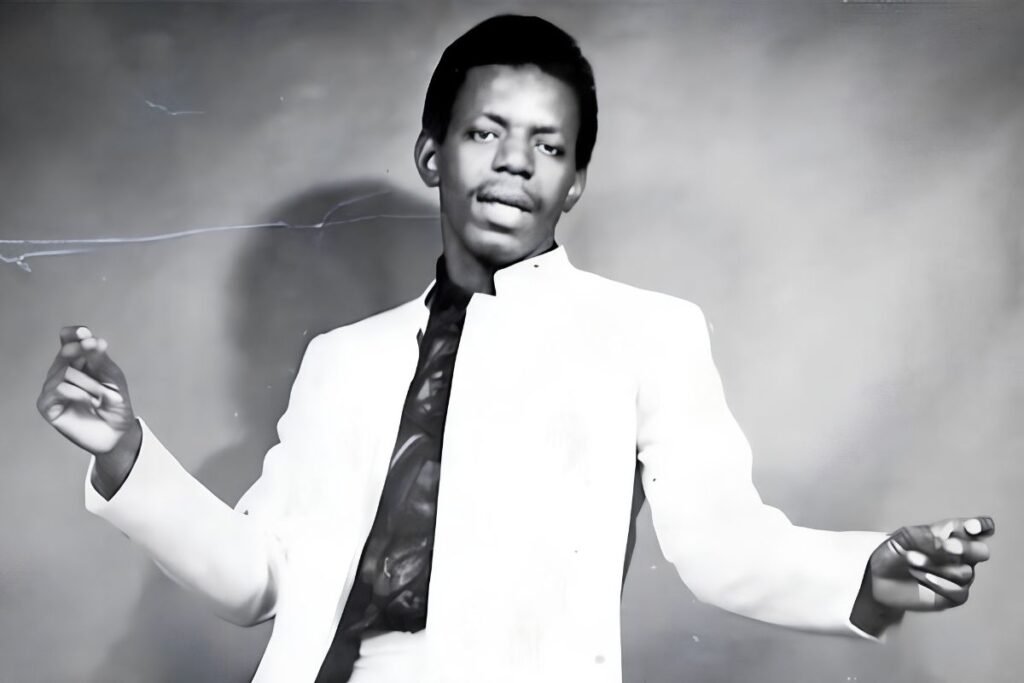
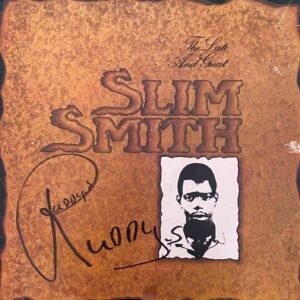
Slim Smith was one of the defining voices of Jamaica’s rocksteady years. Born Keith Smith in 1948, he brought a rare level of soul and vulnerability to the Kingston recording studios of the 1960s. Whether leading a harmony group or standing alone at the microphone, Smith’s recognizable tone and emotional range set a benchmark that few in the history of reggae have ever matched.
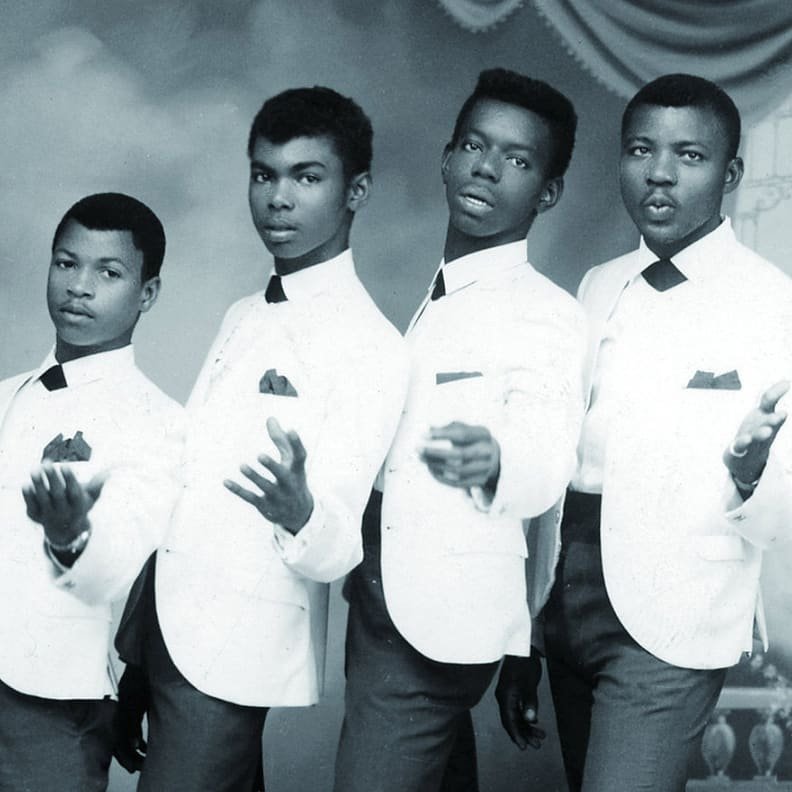
Growing up in the West Street area of Kingston, his raw talent was obvious early on. By his teens, he was already performing with the Victors Youth Band—a group that famously made a splash at the 1964 Jamaican Festival. But his real breakthrough came when he joined the initial lineup of The Techniques, a harmony group founded in 1962 by Winston Riley while still at school.
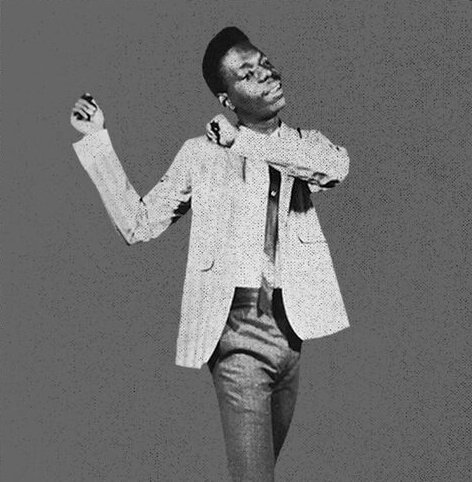
The Golden Era of The Techniques
The Techniques started like many legendary groups of the time: singing on street corners and at school shows. Their professional life changed when they met the “Trojan” himself, producer Duke Reid. According to some accounts, it was Stranger Cole who introduced them.
Under Reid’s guidance, Smith’s voice began to anchor hits like “Don’t Leave Me,” “When You Are Wrong,” and “Little Did You Know.” Influenced by American soul giants like Sam Cooke and Curtis Mayfield, Smith’s ability to blend smooth gospel-inflected phrasing with the upbeat energy of ska made him an instant star.
The Studio One Years
As Jamaica’s music slowed down from the frantic pace of ska to the cool, bass-heavy groove of rocksteady around 1966, Smith began recording for Studio One under Coxsone Dodd. This transition proved he was more than just a group singer.
His solo efforts during this window produced timeless tracks like “Rougher Yet” and “I’ll Never Let Go.” These became “foundational rhythms” that producers would recycle for decades in reggae and dancehall.
The Uniques and Global Reach
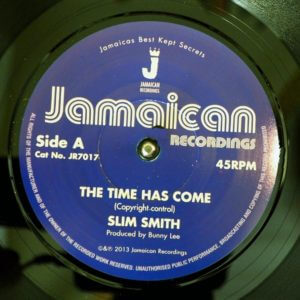
In the late 1960s, Smith teamed up with producer Bunny Lee to reform The Uniques group. Smith’s lead on “My Conversation/Beatitude” that turned the group into a powerhouse.
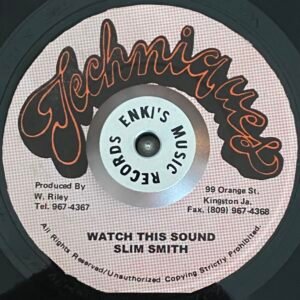
By 1968, Smith was balancing group duties with a prolific solo output. He became a master of the “reggae cover,” taking classics like “Everybody Needs Love” and “Rain From the Skies” and making them entirely his own. “Watch This Sound” was another hit of his: it was a cover of Stephen Stills’ “For What It’s Worth,” but Smith’s version became a hit, reflecting the social mood of the late ’60s.
But he also had hit songs that were not covers, like “Blinded by Love”.
A Tragic Final Act
Despite the effortless beauty of his voice, Smith’s personal life was increasingly fraught. He struggled with mental health and spent time at Bellevue Hospital in Kingston. He died when he was just 24, due to a tragic domestic accident.
Fact-Checking: This post was written by Enki’s Music Records. Because reggae history is full of myths and conflicting stories, we do our best to cross-examine every detail using trusted archives, respected music magazines, and verified interviews. If you find our research helpful and want to use this article as a source, please support our work by crediting us with a link to this page.
Imagery: We source our photos online and credit the original creator or hosting website whenever possible. If you are the owner of a photo used here and want it credited differently or removed, please let us know and we will handle it immediately.